Design Manifesto
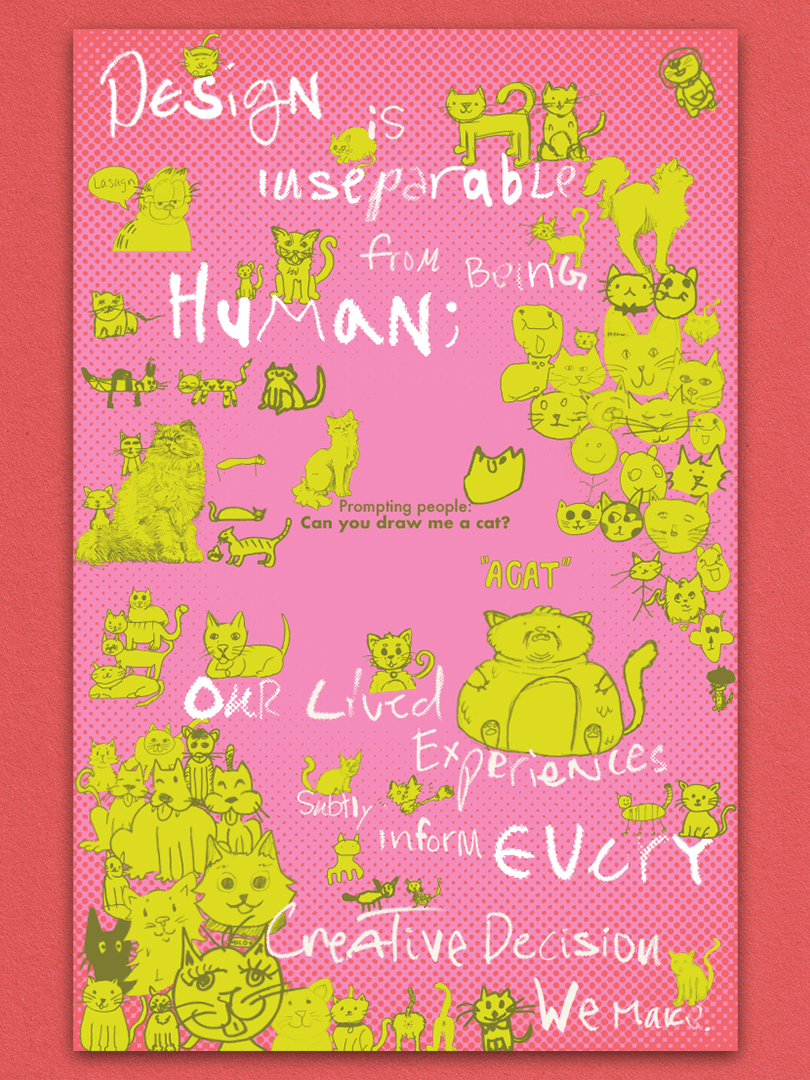
Design is inseparable from being human. Our lived experiences subtly inform every creative decision we make.
IMPACT AREA
Manifesto
Client
Professor Ellen Schofield
SERVICES
Design
School Work
Research
Year
2025
OVERVIEW
Design is inseparable from being human; our lived experiences subtly inform every creative decision we make. In an age of automation, artificial intelligence and shortcuts, design is losing the sensitivity and human touch that makes our work impactful. This shift is a symptom of something much larger than the field of design: late-stage capitalism’s demand for hyper-efficiency at any cost. The system we live under prioritizes speed and profit over care and thought. Artificial Intelligence helps propel these pressures by producing work at speeds too fast to be replicated by humans. It is optimized for outputting work efficiently, but in doing so, it loses out on the nuance and human judgement that makes design effective, thoughtful, and meaningful. Work made by artificial intelligence flattens out the richness that lived experience brings during the design process and simply produces a shallow imitation of what a human could make. Design is not just about making a polished product; it is instead about interpreting and responding to the world we live in. As designers, we believe that the process matters as much as the finished product. True creativity and impactful solutions require time and attention to the tiniest of details. We believe that our lived experiences are the foundation of design, and artificial intelligence cannot replicate that. The memories, observations and experiences we’ve had subtly influences every decision we make as designers, whether we are conscious of it or not. This unique depth each designer brings cannot be replicated by an algorithm; it is something we develop and strengthen through experiencing life. Design is, and always has been, a human practice. When we design, we design with awareness, intention, and empathy. As the pressures of hyper-efficiency grow, our goal is to remain grounded in what makes our work human. Design exists to serve people, and only human insight can ensure it serves us effectively.
Design is inseparable from being human; our lived experiences subtly inform every creative decision we make. In an age of automation, artificial intelligence and shortcuts, design is losing the sensitivity and human touch that makes our work impactful. This shift is a symptom of something much larger than the field of design: late-stage capitalism’s demand for hyper-efficiency at any cost. The system we live under prioritizes speed and profit over care and thought. Artificial Intelligence helps propel these pressures by producing work at speeds too fast to be replicated by humans. It is optimized for outputting work efficiently, but in doing so, it loses out on the nuance and human judgement that makes design effective, thoughtful, and meaningful. Work made by artificial intelligence flattens out the richness that lived experience brings during the design process and simply produces a shallow imitation of what a human could make. Design is not just about making a polished product; it is instead about interpreting and responding to the world we live in. As designers, we believe that the process matters as much as the finished product. True creativity and impactful solutions require time and attention to the tiniest of details. We believe that our lived experiences are the foundation of design, and artificial intelligence cannot replicate that. The memories, observations and experiences we’ve had subtly influences every decision we make as designers, whether we are conscious of it or not. This unique depth each designer brings cannot be replicated by an algorithm; it is something we develop and strengthen through experiencing life. Design is, and always has been, a human practice. When we design, we design with awareness, intention, and empathy. As the pressures of hyper-efficiency grow, our goal is to remain grounded in what makes our work human. Design exists to serve people, and only human insight can ensure it serves us effectively.
CHALLENGE
WHAT WE DID
OVERVIEW
Design is inseparable from being human; our lived experiences subtly inform every creative decision we make. In an age of automation, artificial intelligence and shortcuts, design is losing the sensitivity and human touch that makes our work impactful. This shift is a symptom of something much larger than the field of design: late-stage capitalism’s demand for hyper-efficiency at any cost. The system we live under prioritizes speed and profit over care and thought. Artificial Intelligence helps propel these pressures by producing work at speeds too fast to be replicated by humans. It is optimized for outputting work efficiently, but in doing so, it loses out on the nuance and human judgement that makes design effective, thoughtful, and meaningful. Work made by artificial intelligence flattens out the richness that lived experience brings during the design process and simply produces a shallow imitation of what a human could make. Design is not just about making a polished product; it is instead about interpreting and responding to the world we live in. As designers, we believe that the process matters as much as the finished product. True creativity and impactful solutions require time and attention to the tiniest of details. We believe that our lived experiences are the foundation of design, and artificial intelligence cannot replicate that. The memories, observations and experiences we’ve had subtly influences every decision we make as designers, whether we are conscious of it or not. This unique depth each designer brings cannot be replicated by an algorithm; it is something we develop and strengthen through experiencing life. Design is, and always has been, a human practice. When we design, we design with awareness, intention, and empathy. As the pressures of hyper-efficiency grow, our goal is to remain grounded in what makes our work human. Design exists to serve people, and only human insight can ensure it serves us effectively.
CHALLENGE
WHAT WE DID
OVERVIEW
Design is inseparable from being human; our lived experiences subtly inform every creative decision we make. In an age of automation, artificial intelligence and shortcuts, design is losing the sensitivity and human touch that makes our work impactful. This shift is a symptom of something much larger than the field of design: late-stage capitalism’s demand for hyper-efficiency at any cost. The system we live under prioritizes speed and profit over care and thought. Artificial Intelligence helps propel these pressures by producing work at speeds too fast to be replicated by humans. It is optimized for outputting work efficiently, but in doing so, it loses out on the nuance and human judgement that makes design effective, thoughtful, and meaningful. Work made by artificial intelligence flattens out the richness that lived experience brings during the design process and simply produces a shallow imitation of what a human could make. Design is not just about making a polished product; it is instead about interpreting and responding to the world we live in. As designers, we believe that the process matters as much as the finished product. True creativity and impactful solutions require time and attention to the tiniest of details. We believe that our lived experiences are the foundation of design, and artificial intelligence cannot replicate that. The memories, observations and experiences we’ve had subtly influences every decision we make as designers, whether we are conscious of it or not. This unique depth each designer brings cannot be replicated by an algorithm; it is something we develop and strengthen through experiencing life. Design is, and always has been, a human practice. When we design, we design with awareness, intention, and empathy. As the pressures of hyper-efficiency grow, our goal is to remain grounded in what makes our work human. Design exists to serve people, and only human insight can ensure it serves us effectively.
CHALLENGE
WHAT WE DID
POST PROJECT REFLECTION